
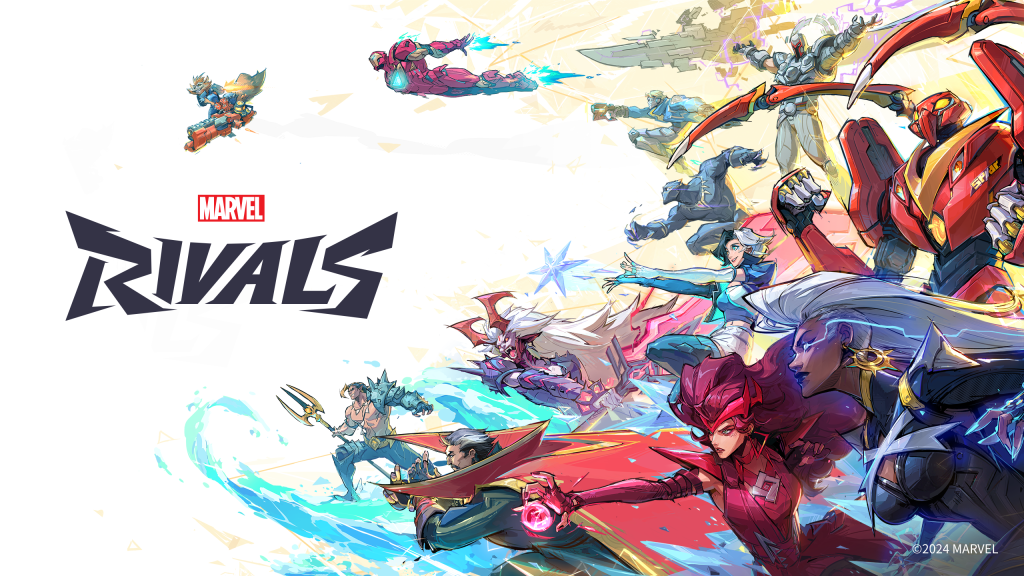
The whole reason this post exists started with a conversation with my son.
He came to me excited, he was playing Marvel Rivals again. But the excitement quickly turned into frustration as he explained how he wanted to play Gambit… except his team insta-locked the character before he could even click. And then he launched into a full breakdown of team comps, roles, why Gambit matters, why someone else shouldn’t have picked him, and how the match fell apart.
And I’ll be honest, I was lost.
I know my way around tech, cloud platforms, retro dev kits and the occasional Linux compile. But this? This was a different language. A fast, chaotic, superhero‑powered dialect spoken by teenagers at 200 words per minute.
So I decided to fix that for myself, for other parents, and for anyone who’s ever nodded along pretending to understand why a raccoon is yelling at a Norse god.
This is a dad‑friendly crash course to Marvel Rivals, built from that moment with my son, and written so the next time he talks about Gambit getting insta‑locked, I can actually keep up.
The Three Classes (Explained Like You’re Jumping Into a Match Between Meetings)
Marvel Rivals is built around three roles. Once you understand these, the chaos starts to make sense.
Duelists (DPS)
These are the flashy, high‑damage heroes. They’re the strikers, the forwards, the “I can handle this” characters who absolutely cannot handle being punched.
- High damage
- Low health
- Built for 1v1 fights
- Often fast, sneaky, or both
If your kid says “We need more damage,” this is your lane.
Vanguards (Tanks)
These are the big bodies up front. They take hits, start fights, and make space for everyone else to shine.
- Highest health
- Protect the team
- Hold the frontline
- Some dive, some anchor
If your team keeps getting steamrolled, this is the fix.
Strategists (Support)
These are the healers, buffers, controllers, and “glue” that holds a team together.
- Healing, shields, buffs
- Crowd control
- Team utility
- Usually targeted first
If your kid says “Protect the support!” — they mean this person.
Dad-Friendly Glossary (So You Don’t Have to Pretend You Know)
- CC (Crowd Control): Stuns, freezes, knockbacks — basically superhero time‑outs.
- Dive: Fast heroes jumping past tanks to delete the squishy ones.
- Backline: Where supports hide and pray.
- Frontline: Where tanks get punched repeatedly.
- C9: Losing because no one stood on the objective. It will happen to you.
- Ult: The big, flashy “everyone stop what you’re doing” ability.
- Comp: Your team’s hero lineup — and whether it makes sense.
- Instalock: When someone picks a hero instantly, giving you zero chance to choose them.
Full Character Class Table
Character | Class | Dad-Friendly Description |
|---|---|---|
| Adam Warlock | Strategist | Cosmic healer/support who keeps the squad alive. |
| Angela | Duelist | Divine blade DPS who dives in fast. |
| Black Panther | Duelist | Pounces in, hits hard, escapes clean. |
| Black Widow | Duelist | Sneaky assassin who deletes key targets. |
| Blade | Duelist | Vampire‑hunting melee brawler. |
| Captain America | Vanguard | Shield‑first protector who anchors the frontline. |
| Cloak & Dagger | Strategist | Light/dark duo offering utility and control. |
| Daredevil | Duelist | Close‑range fighter who excels in 1v1s. |
| Deadpool | Duelist | Chaotic DPS with mobility and self‑healing. |
| Doctor Strange | Strategist | Space‑bending support who controls fights. |
| Emma Frost | Strategist | Psychic controller with shields and utility. |
| Gambit | Duelist | Card‑throwing burst‑damage dealer. |
| Groot | Vanguard | Tree tank who protects teammates and holds space. |
| Hawkeye | Duelist | Long‑range sniper who punishes from afar. |
| Hela | Duelist | Damage dealer with sustain and deadly combos. |
| Hulk | Vanguard | Big green wall who smashes and soaks damage. |
| Human Torch | Duelist | High‑mobility fire DPS who burns everything. |
| Invisible Woman | Strategist | Shielding support who protects the team. |
| Iron Fist | Duelist | Martial‑arts brawler with burst melee damage. |
| Iron Man | Duelist | High‑tech ranged DPS with strong mobility. |
| Jeff the Land Shark | Duelist | Small, fast, bite‑happy damage gremlin. |
| Loki | Strategist | Trickster support who disrupts and confuses enemies. |
| Luna Snow | Strategist | Ice‑based healer/support with strong utility. |
| Magik | Duelist | Teleporting melee DPS with demonic burst. |
| Magneto | Strategist | Battlefield controller who manipulates metal. |
| Mantis | Strategist | Pure healer/support who keeps everyone alive. |
| Mister Fantastic | Vanguard | Stretchy frontline tank with crowd control. |
| Moon Knight | Duelist | Close‑range brawler who excels in duels. |
| Namor | Vanguard | Dive tank who crashes into the enemy backline. |
| Peni Parker | Strategist | Tech support with shields and utility. |
| Phoenix | Strategist | High‑impact support with healing and control. |
| Psylocke | Duelist | Psychic assassin with mobility and burst. |
| The Punisher | Duelist | Heavy‑firepower ranged DPS. |
| The Thing | Vanguard | Rocky bruiser who absorbs damage and punches hard. |
| Rocket Raccoon | Duelist | Small, fast, high‑damage pest who harasses enemies. |
| Rogue | Duelist | Ability‑stealing brawler who adapts mid‑fight. |
| Scarlet Witch | Strategist | Chaos‑magic controller with huge impact abilities. |
| Squirrel Girl | Duelist | Swarm‑based DPS who overwhelms enemies. |
| Spider-Man | Duelist | Agile damage dealer who picks off isolated targets. |
| Star-Lord | Duelist | Mobile ranged DPS with team buffs. |
| Storm | Strategist | Weather‑based support with strong area control. |
| Thor | Vanguard | Heavy frontline bruiser with stuns and sustain. |
| Ultron | Strategist | Drone‑based controller who shapes the battlefield. |
| Venom | Vanguard | Aggressive tank who dives and disrupts. |
| Winter Soldier | Duelist | Reliable ranged DPS with strong mid‑range pressure. |
| Wolverine | Duelist | Healing brawler who dives into the thick of it. |
How to Actually Play Without Embarrassing Yourself
Pick a role your team needs.
If you see no Vanguards, grab one.
If you see no Strategists, be the adult in the room.
Stick with your team.
Running off alone is how you get deleted by a squirrel.
Play the objective.
Standing on the point wins games.
Chasing that one low‑health enemy across the map does not.
Switch heroes when needed.
You’re not locked in, adapt like Rogue, not like a dad stuck on the wrong HDMI input.
If you’ve made it this far, you’re already ahead of where I was when my son started explaining why Gambit getting insta‑locked ruined his whole match.
Now, instead of nodding politely and pretending I understand, I can actually follow the conversation and maybe even jump into a match with him without embarrassing myself in the first 30 seconds.
Will I still pick the wrong hero at least once?
Absolutely.
Will I still get yelled at for missing the objective?
Almost guaranteed.
But now, when he says “Dad, they insta‑locked Gambit again,” I can smile and say:
“Don’t worry, Dad finally gets it.”
And honestly? That’s the whole point.
This post was written with ❤️ and ☕️
 The Reboot Diaries